
There is a very specific kind of panic that hits when your dog throws up on the living room rug at 10 p.m., or your cat skips two meals in a row and won’t touch their favorite treat. Digestive upset is one of the most common reasons pet parents reach out — and also one of the easiest to misjudge in either direction.
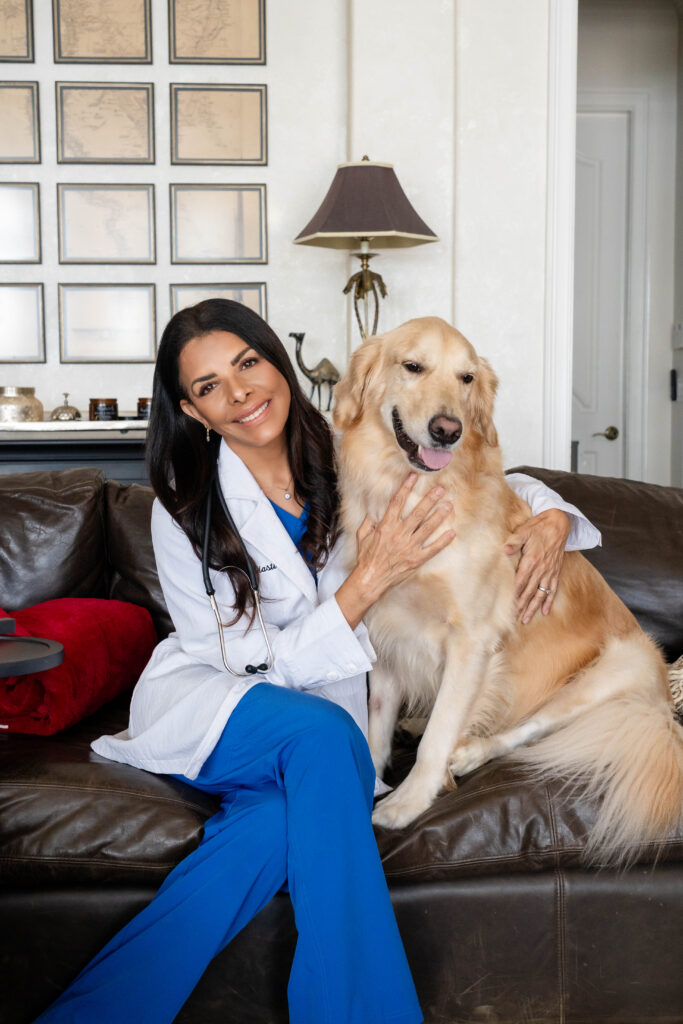
Vetzi is founded by Dr. Azza Diasti-Kennedy, a practicing Florida veterinarian with over two decades of hands-on experience. Her honest take: most of these cases can be sorted out from your couch — and knowing what to watch for makes all the difference.
✓ Same-day video visits ✓ Florida-licensed vets ✓ Clear guidance — no unnecessary ER trips
Most digestive upsets are not emergencies — but a few are. Here’s how to read what you’re seeing before you decide what to do next.
This is one of the most common questions pet parents type into a search bar at the worst possible hour, and the honest answer is: it depends on a few key details. According to Cornell University’s College of Veterinary Medicine, an isolated vomiting episode, such as after eating grass, is usually nothing to worry about, but vomiting even once a week may point to something worth investigating, and blood, matter resembling coffee grounds, lethargy, a painful belly, fever, or vomiting lasting more than 24 hours all warrant a veterinary visit. If your dog throws up once, is still acting like themselves, and is eating and drinking normally afterward, this is very often something that can be watched at home with a video check-in for peace of mind.
The picture changes if your dog has vomited repeatedly, cannot keep water down, seems weak or unusually quiet, or has been vomiting alongside diarrhea for several days without improvement. Dr. Azza describes this pattern clearly from her own practice: a dog that has been constantly vomiting and having diarrhea for days, and is now lethargic and unable to move normally, needs an in-person visit for fluids, not a video call. The line between “let’s watch this together” and “this needs a clinic” almost always comes down to how your dog is doing otherwise, not just the vomiting itself.
Some of the most panic-inducing symptoms turn out to be far less serious than they look. A little blood or mucus in the stool, for example, can be alarming to see, but it is often manageable with guidance and a fecal exam at your regular vet’s office the next day, rather than an emergency room visit at midnight. Similarly, occasional vomiting after eating something unusual outside is common enough that it rarely signals a major problem on its own, similar to how a dog eating grass followed by a single vomiting episode is typically nothing more than an isolated stomach upset.
Cats present their own version of this pattern, and one of our veterinarians can often tell through video whether a vomiting cat is likely dealing with a hairball or a minor food sensitivity, versus a pattern that deserves a closer look. Diarrhea works the same way for dogs, where a veterinarian can help you figure out through a video visit whether a dog’s diarrhea needs an in-person exam or can be managed with dietary changes and monitoring at home.
A veterinarian will ask about your pet’s appetite, energy level, and bathroom habits, along with when the symptoms started and whether anything changed recently in food, environment, or activity. Coming prepared helps the visit move faster and gives our vet a clearer picture to work from:
Through video, our vet can also observe how your pet is moving and behaving, which offers real insight into whether this is a mild, self-limiting issue or something needing further workup. From there, you will get a clear, specific plan, whether that means a short period of bland food and monitoring at home, a prescription if appropriate, or a direct recommendation to be seen in person for bloodwork, imaging, or fluids.
Certain signs mean it is time to stop watching and get to a clinic. Repeated vomiting that will not stop, inability to keep any water down, vomiting blood, a swollen or painful abdomen, or a pet that is not breathing normally, not responsive, or not bright and alert all call for immediate in-person veterinary attention. The same is true if diarrhea and vomiting have continued for several days alongside lethargy, because dehydration can become dangerous quickly, especially in puppies, kittens, and senior pets.
For everything short of those signs, a telehealth visit is a genuinely useful first step, one that can save you an unnecessary trip and give you real answers instead of a guess made under stress.
Vomiting and diarrhea are unsettling to watch, but in most cases a clear, informed assessment is only a video call away. Our veterinarians are here to help you figure out what’s actually going on — honestly and without the drama.
✓ Same-day video appointments ✓ Prescriptions available ✓ No unnecessary ER trips
Most GI cases can be sorted out from your couch.